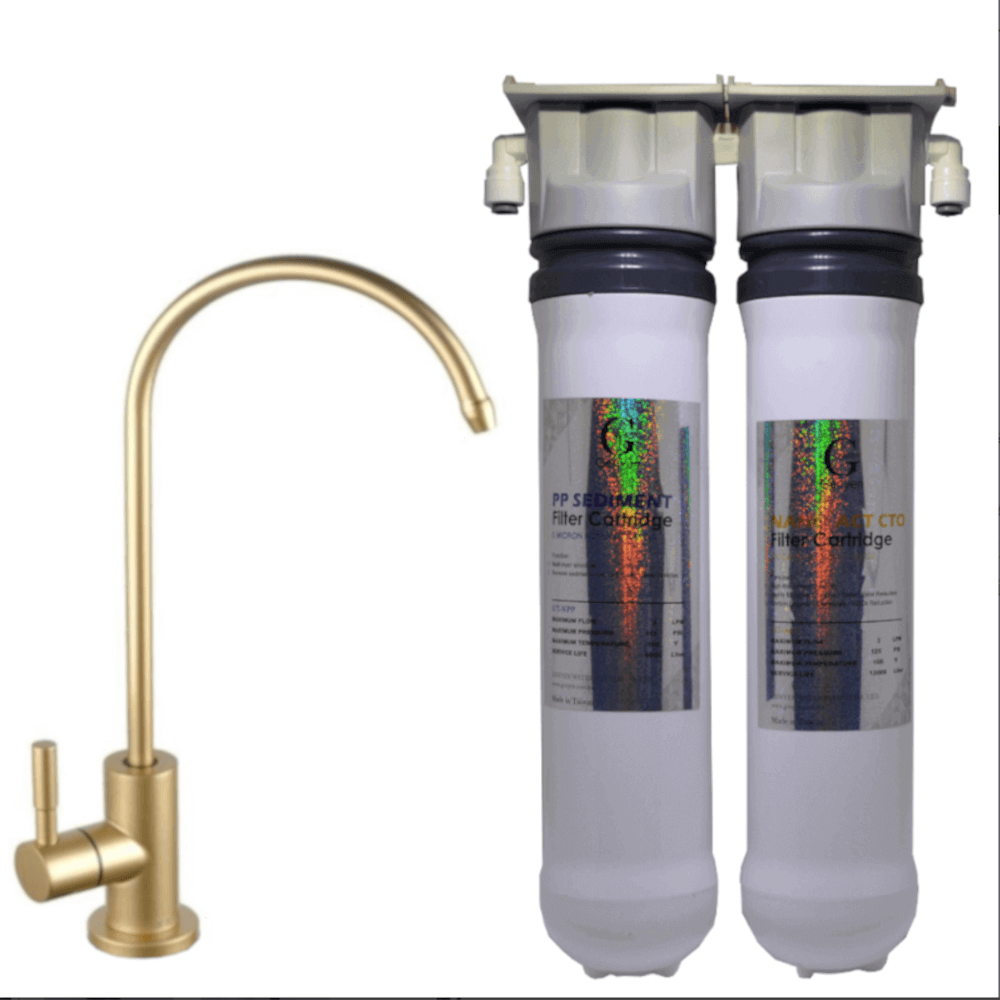
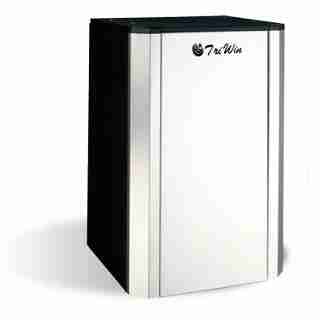
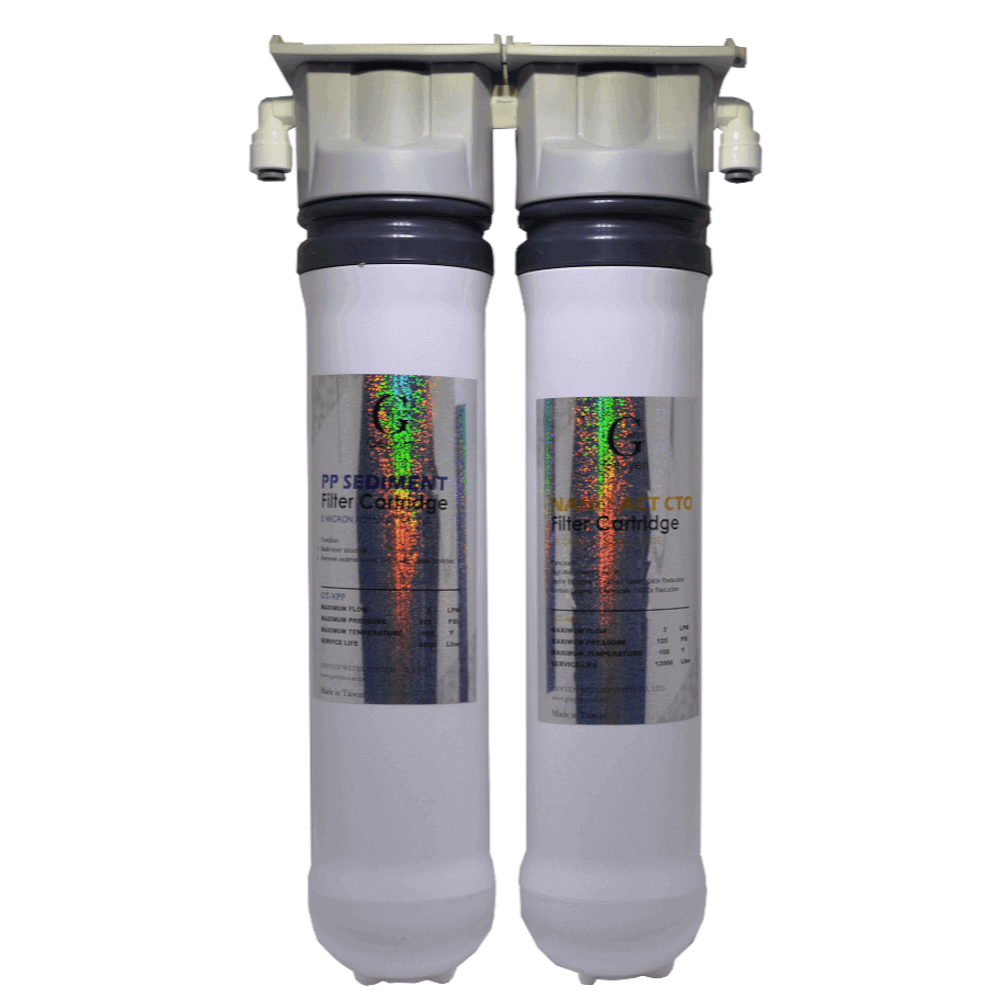
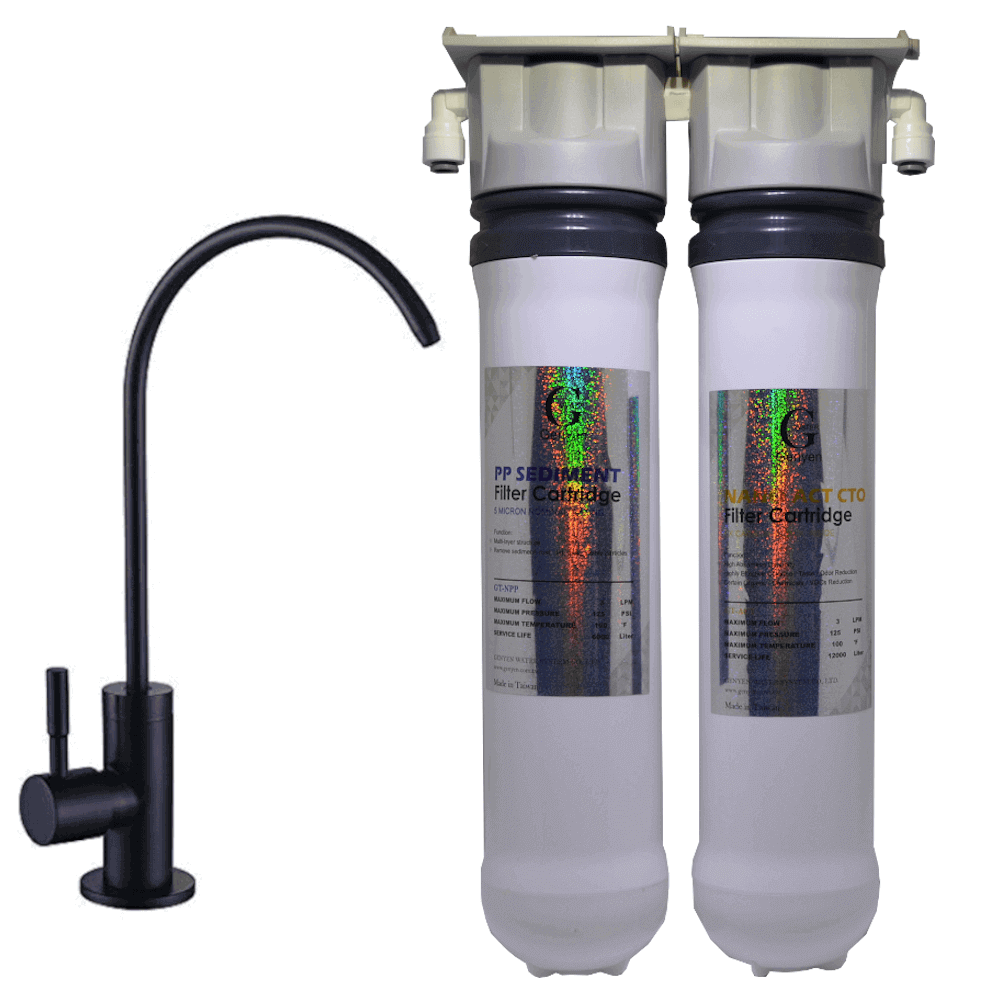
Reverse Osmosis Water SystemReverse Osmosis System with 50 gpd Membrane Reverse Osmosis is a technology that is used to remove a large majority of contaminants from water by pushing the water under pressure through a semi-permeable membrane. By forcing pressure on the salt side of the RO and force the water across the semi-permeable RO membrane, leaving almost all (around 95% to 99% of dissolved salts behind in the reject stream. The desalinated water that is demineralized or deionized, is called permeate (or product) water. The water stream that carries the concentrated contaminants that did not pass through the RO membrane is called the reject (or concentrate) stream.Heavy metals are dissolved in water along with organic matter, bacteria, viruses, etc. do not pas through the reverse osmosis film (reverse osmosis membrane pore size is only 0.0001um, the virus generally have a diameter of 0.02-0.4um, common bacteria in diameter 0.4-1um FEATURESSuitable for residential use, Industry standard 10 x 2.5 inch NSF twin undersink housingsCSM Reverse Osmosis 50 GPD / 200LT Membrane Easywell 10 inch inline post carbon filter Brass Entry 1/2″ Inline 1/4″ outlet Port (feed Water)NSF Ceramic Water Filter TapTiger Double O Ring isolating Ball ValveNSF 1/4″ Tubing For Easy InstallationEasy to use Tiger Double O Ring push in fittings Plumbers Tape Waste water drain clamp10″ Water filter housing filter wrench Aquapro 12L Storage Tank4 Water Filter Stages Stage 1: Polypropylene Spun Sediment filter 5 micron Replace every 6 monthsRemoves suspended matter such as silt, rust sand, algae, sediment, scale particles, dirt and cloudiness from the waterStage 2: Carbon block filter 5 micron Replace Every 6 MonthsRemoves herbicides, pesticides, chlorine, chlorine bi-products and Volatile organic compounds (VOC’s) to protect the membraneStage 3: CSM 50 / 200LT GPD Reverse Osmosis Membrane 0.0001 Micron Replace every 2-6 years (Depending on water quality)Removes Over 98% or Impurities including Organic & Inorganic Minerals, Heavy Metals & FluorideStage 4: Inline post GAC Filter Replace Every 12 MonthsPolishes the water and removes any taste or odour water may have picked up while sitting in the tankOrganic Minerals VS Inorganic Minerals In WaterContrary to common beliefs, less than 1% of the organic minerals are actually found in most raw water supplies. With the increase of pollutants, our water supply contains mostly inorganic minerals. Inorganic minerals consist of calcium, iron, magnesium, carbonate and lime compounds, which are not compatible with our bodies. The body’s cells reject these minerals leaving dissolved inorganic substances (acid crystals – minerals deposits) throughout the body. This accumulation of debris creates more work and trouble for the body, such as arthritis in joints, gallstones, kidney stones and mineral deposits in artery walls.Organic minerals that are considered soluble, which means the body absorbs sustenance into the cells, are found in our live foods such as fruits & vegetables. One glass of freshly squeezed orange juice would be higher in minerals than 30 gallons of untreated raw water. Purified water provides a necessary rinsing treatment for hydration purposes as our body is mostly fluid (over 80% water) and equally important, is to rinse impurities out of our body. Drinking purified water both prevents inorganic minerals from entering our bodies and removes inorganic mineral deposits already there.System DimensionsHeight: 39cm Width: 37cm Depth: 21cmStorage Tank DimensionsHeight (With Stand): 42cm Height (No Stand): 38.5cm Width: 27cmSystem RequirementsPressure: 50-100 psiTDS: <1750 mg/LIron: <0.02 mg/LManganese: <0.1 mg/LTotal Hardness: <500 mg/LTemperature: <45°CNOTE: Water that falls outside these parameters may cause the system to produce higher ratios of drain water and may lower the 50GPD rating. Water Quality in different areas can greatly impact the life of a Reverse Osmosis Membrane. Please contact us if you require further information about cartridge replacements.50 gpd Reverse Osmosis Membrane Specifications● Flow Rate: 50 Gallons / 200 Liters Per Day ● Dimensions: 11.74″ X 1.75″ ● Replace every 2 – 6 years ● Maximum temperature 38c ● Thin Film Membrane (TFM) ● Meets FDA requirements for food and beverage contact ● Certified to NSF/ANSI 58 ● Membrane sheet from Saehan ● Model: TFC-1812-50 ● Brand: CSM ● Capacity: more than 97% removal of impuritiesEstimated Membrane Rejection:Substance% rejectionSubstance% rejectionAluminium96-98Fluoride96-98Sodium92-98Bromide90-95Magnesium93-98Cyanide93-97Potassium92-96Sulfate96-99Calcium93-99Thiosulfate96-98Manganese96-98Silicate92-95Iron96-98Silica95-98Copper96-99Nitrate93-98Nickel96-99Polyphosphate96-98Cadmium93-97Orthophosphate96-98Silver93-96Chromate90-95Zinc97-99Bacteria>99Mercury94-97Lead96-98Hardness Ca&Mg93-97Arsenic90-98Radioactivity93-97Medications97-99Chloride92-98Chlorofoam71-90Ammonium85-90Tin (11) Sulfate83-87PCB’s97-99PBA’s96-98The Waste ( Brine ) port requires an external flow control (flow restrictor) that is sized to the membrane capacity, typically a 3:1 ratio.Replacement Water Filters Links1st Stage: Sediment Water Filter 2nd Stage: Carbon Water Filter 3rd Stage: Reverse Osmosis Membrane 4th Stage: Post Carbon Water Filter